RSA Help Desk Live Verify


According to the 2026 RSA ID IQ Report, 51% of organizations identify social engineering attacks on the IT help desk as their most significant identity risk, and 69% report experiencing an identity-related breach in the last three years. Tech support fraud alone cost organizations nearly $600M in 2025.
RSA Help Desk Live Verify closes the verification gap with bi-directional, passwordless identity confirmation that cannot be faked, forced, or phished. Read on for the key questions, concept definitions, and common questions from security teams evaluating help desk fraud prevention.
Help desks are built for speed and service. When someone calls claiming to be locked out, the pressure is to resolve the issue quickly, and the standard approach (asking for a name, employee ID, or answers to security questions) gives an attacker with basic research skills exactly what they need to pass. Shared secrets are phishable. Knowledge-based authentication can be defeated with publicly available information. And traditional MFA only authenticates one direction: the user proves identity to the system, but the system never proves anything to the user.
This asymmetry is what attackers exploit. A caller pretending to be an IT technician or a user impersonating a colleague only needs to know enough to sound credible. Without a cryptographic verification mechanism on both sides of the interaction, the help desk remains a reliable entry point regardless of how strong the organization’s authentication is everywhere else.
RSA Help Desk Live Verify is a core capability of RSA ID Plus that replaces knowledge-based verification with cryptographic, bi-directional identity confirmation. Both the help desk agent and the user verify each other’s identity using phishing-resistant credentials, with no PINs, passwords, or one-time codes shared during the interaction.
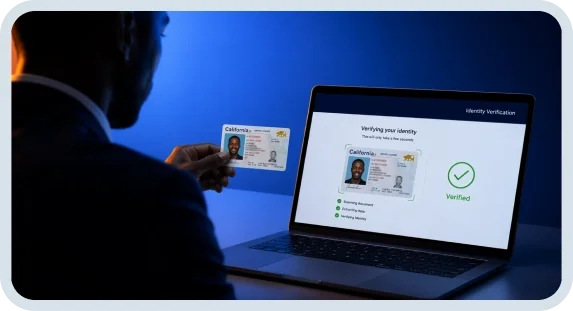
The solution also extends to users who have no registered authenticator at all. ID Verification powered by ID Dataweb allows contractors, temporary workers, and partners to verify their identity in real time using a government-issued ID, driver’s licence, or passport through a browser with no app and no prior enrollment required. RSA’s own internal deployment reduced help desk call time costs by 66%.
Download the solution brief for the full capability breakdown, channel coverage details, and information on how to request a demo.
Help desk calls are the most visible attack surface, but they are not the only one. RSA Help Desk Live Verify extends phishing-resistant verification to any workflow where identity needs to be confirmed before a sensitive action is taken: wire transfers, VPN recovery, HR record changes, credential enrollment, and high-value financial transaction approvals. Every interaction is logged and available for audit and compliance reporting.
The solution brief references several techniques and mechanisms that frame how help desk social engineering works and how RSA Help Desk Live Verify addresses it. These definitions provide context for the capabilities described in the PDF.
What is social engineering in an IT security context?
Social engineering is the use of psychological manipulation rather than technical exploitation to gain unauthorized access to systems, data, or credentials. In an IT context, it most commonly involves an attacker impersonating an employee, executive, or IT technician to convince a help desk agent to reset credentials, grant access, or bypass a verification step. It is effective precisely because it targets human judgment rather than technical controls, making even organizations with strong MFA deployments vulnerable if the help desk verification process relies on shared secrets or knowledge-based authentication.
What is an MFA bypass attack?
An MFA bypass attack is any technique that allows an attacker to circumvent multi-factor authentication without directly compromising the authenticator itself. Common methods include social engineering a help desk agent into resetting or enrolling new credentials, real-time phishing (intercepting and replaying OTPs), SIM swapping, and prompt bombing (flooding a user with push notifications until they approve one). According to the 2026 RSA ID IQ Report, 51% of organizations identify bypass attacks as their most significant identity risk. Phishing-resistant MFA using FIDO2 eliminates most technical bypass methods, but help desk social engineering remains effective unless the verification process itself is also phishing-resistant.
What is bi-directional identity verification?
Bi-directional identity verification is a model in which both parties in an interaction confirm each other’s identity before a sensitive action proceeds. In a standard help desk interaction, only the user is verified (or is supposed to be). Bi-directional verification adds the second step: the user also confirms that they are genuinely speaking with an authorized RSA help desk agent, not an attacker impersonating one. RSA is the only vendor that closes this vulnerability in both directions. Without mutual verification, tech support scams can succeed even when users are well-trained, because the attacker controls the interaction and the user has no way to confirm who they are speaking with.
What is deepfake fraud in identity verification?
Deepfake fraud uses AI-generated audio, video, or synthetic identity documents to impersonate a real person during an identity verification process. As the quality of AI-generated media has improved, deepfake attacks have shifted from targeted political or reputational attacks to financial and identity fraud. Help desk interactions conducted over video or voice are particularly vulnerable, as an attacker can synthesize a convincing likeness of the person they are impersonating. RSA Help Desk Live Verify uses cryptographic verification rather than audio or visual confirmation, making the outcome of the verification independent of whether the voice or face presented is genuine.
RSA Help Desk Live Verify is a capability within RSA ID Plus that replaces knowledge-based help desk verification with bi-directional, passwordless identity confirmation. Neither party shares PINs, passwords, or one-time codes during the interaction, eliminating the credential exposure that makes social engineering effective. It is the only solution that verifies both the help desk agent and the user simultaneously.
Traditional help desk verification relies on shared secrets (employee IDs, security questions, or verbal PINs) that an attacker can obtain through research or phishing. RSA Help Desk Live Verify replaces these with cryptographic verification tied to a registered device or government-issued ID, which cannot be guessed, intercepted, or replicated by an attacker who does not physically possess the credential. Because both parties verify each other, impersonation attacks from either direction are blocked at the point of contact.
RSA Help Desk Live Verify includes ID Verification powered by ID Dataweb, which allows any user to verify their identity in real time using a government-issued ID, driver’s licence, or passport through a browser. No app installation or prior enrollment is required, which means contractors, temporary staff, and partners can be verified to the same standard as employees with registered authenticators. This closes the verification gap that has historically made extended workforce users a preferred target for social engineers.
The same bi-directional verification model applies to any workflow where identity needs to be confirmed before a sensitive action proceeds: wire transfers, VPN access recovery, HR record changes, credential enrollment, and high-value financial transaction approvals. Every verified interaction is logged for audit and compliance reporting, making RSA Help Desk Live Verify relevant for financial services, government agencies, and any regulated organization with strict identity assurance requirements.
RSA Help Desk Live Verify is a native capability within RSA ID Plus, so it uses the same identity infrastructure already in place for authentication and access management. Organizations that have already deployed RSA Help Desk Live Verify for authenticator-equipped users can extend coverage to unenrolled users through ID Verification without changing their existing configuration. RSA Risk AI and RSA Mobile Lock layer in real-time threat detection and device security alongside the verification process.
Help Desk Live Verify is included in the Hybrid IAM E2, Hybrid IAM E3, and Entra ID Enhanced M1 plans. It is available as an add-on with the Hybrid auth E1 plan and is not available with the Cloud IAM C1 plan. Contact us for plan details or to request a demo.


 Included