Financial Services Cybersecurity Starts with Identity.
Financial services cybersecurity depends on controlling who gets access to what and proving it to regulators.
RSA gives banks, insurers, capital markets firms, and wealth managers phishing-resistant authentication, help desk identity verification, and automated access governance across cloud, hybrid, on-premises, and air-gapped environments.

Identity and access management for financial services
RSA is the only platform that unifies phishing-resistant authentication, help desk identity verification, and automated access governance—giving financial institutions one proven foundation to prevent credential-based attacks, satisfy regulators, and stay operational.


Never go offline
The market’s only hybrid authentication failover keeps users authenticated and transactions moving even when connectivity fails.
Block phishing
and social
engineering
and social
engineering
Phishing-resistant MFA and bi-directional help desk verification stop credential theft and social engineering attacks before they start.
Every framework. No
configuration required.
FFIEC, NY DFS, DORA, NIS2, PCI-DSS, SOX, and GLBA compliance is built in, not bolted on.
Authentication, access, and governance for financial institutions
RSA secures financial institutions across 120+ countries, providing the capabilities that banks, insurers, capital markets firms, and other financial services organizations need to prevent breaches, protect operations, and meet every regulatory requirement.
Authentication
RSA ID Plus delivers phishing-resistant MFA, passwordless authentication, and risk-based access controls across cloud, hybrid, and on-premises environments, satisfying PCI-DSS Requirement 8, FFIEC authentication guidance, and DORA ICT risk requirements.
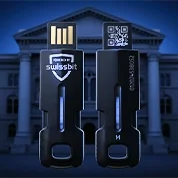
RSA iShield Key 2 for Enterprise
Delivers highest-assurance authentication for privileged users and remote workers in regulated environments with a FIPS 140-3 Level 3, FIDO2-certified security key.

RSA Passwordless
Keep transactions secure while removing friction, with passwordless for every user, in every environment, every time.

RSA® Risk AI
Detect anomalous access behavior and enforce dynamic policy controls to advance Zero Trust and meet DORA continuous ICT risk monitoring mandates.

RSA Help Desk Live Verify
Protect help desk interactions, wire transfers, payments, and account access requests from social engineering and MFA bypass attacks.
Access
RSA provides the access controls financial institutions need: continuous verification, adaptive policy enforcement, and hybrid failover across every environment your workforce operates in.
RSA ID Plus Sovereign Deployment
Deploy full-stack IAM in private cloud, multi-cloud, on-premises, and air-gapped configurations. Purpose-built for institutions with data residency requirements.

Microsoft 365 integration
RSA integrates with Microsoft 365 and Azure AD to secure access across the environments most financial institutions depend on.

RSA Hybrid Failover
The market’s only hybrid authentication failover—users stay authenticated and transactions continue during cloud service disruptions.

Single sign-on (SSO)
Simplify access across hybrid, cloud, and on-premises applications with centralized identity management—less friction for employees, no loss of security.
Governance & Compliance
RSA gives financial institutions the visibility and control to enforce least privilege, automate access certifications, and demonstrate continuous compliance across PCI-DSS, SOX, DORA, FFIEC, NY DFS, and GLBA requirements.

Identity Security Posture Management (ISPM)
RSA Governance & Lifecycle monitors for overprivileged access, dormant accounts, and compliance gaps environment-wide before attackers discover them.
Automated access reviews
Replace manual certification cycles with AI-assisted access reviews to enforce least privilege and generate audit-ready SOX, PCI-DSS, DORA, and FFIEC reports.

Lifecycle automation
Automate joiner/mover/leaver workflows for employees, contractors, and third-party vendors—granting, adjusting, and revoking access on schedule across systems.

Real-time audit trails
Continuous logging and reporting that produces evidence of compliance for OCC, FDIC, and state regulatory examinations without manual effort.
Identity security by financial services segment
RSA protects financial services organizations across every segment of the industry—from global banking to regional credit unions, from insurance to capital markets—with proven solutions across every environment.

Identity security for banking
RSA secures retail and commercial banks with phishing-resistant MFA, help desk identity verification, and automated governance, satisfying FFIEC authentication guidance, GLBA data protection requirements, and PCI-DSS Requirement 8.

Identity security for insurance
RSA provides identity security for P&C, life, and health insurers managing employee access, third-party integrations, and policyholder data. Meet NIST, SOX, and state-level regulatory requirements with automated access governance and continuous compliance monitoring.

Identity security for capital markets
RSA protects trading platforms, brokerage systems, and investment banking operations with high-assurance authentication, privileged access controls, and audit-ready governance aligned to SOX, FINRA, DORA, and NIS2 requirements.

Identity security for wealth management
Secure access for advisors, third-party platforms, and client portals, with the identity lifecycle management and audit documentation that RIA compliance and FINRA oversight require.
How a major APAC bank secured 50,000 identities
See how one of Australia and New Zealand’s largest banks moved IAM to the cloud at its own pace, secured 20,000 employees and 30,000 high-net-worth business banking customers, and met APRA CPS 234 and Australia’s Essential Eight requirements with RSA ID Plus.
“Phishing-resistant authentication. 50,000+ identities managed. Procurement streamlined. Compliance with APRA and Essential Eight—without interrupting operations.”
Frequently asked questions
What are the MFA requirements under PCI-DSS for financial institutions?
PCI-DSS v4.0 Requirement 8.4 mandates multi-factor authentication for all access into the cardholder data environment, including remote access by personnel and third-party vendors. RSA ID Plus satisfies this requirement with phishing-resistant MFA options, including FIDO2 hardware keys, device-bound passkeys, and risk-based authentication across cloud, hybrid, and on-premises environments.
What does DORA require for identity and access management?
DORA (Digital Operational Resilience Act) requires EU financial entities to manage information and communications technology (ICT) risk as part of their operational resilience framework. For identity and access management, this includes privileged access controls, multi-factor authentication, continuous monitoring for access anomalies, and documented audit trails. RSA ID Plus and RSA Governance & Lifecycle address these requirements through phishing-resistant MFA, ISPM, automated access reviews, and real-time audit logging.
What does FFIEC authentication guidance require for online banking?
FFIEC guidance requires financial institutions to implement layered security controls, including risk-based authentication and anomaly detection, for online banking and high-risk transactions. RSA ID Plus delivers adaptive, risk-based MFA that evaluates device, location, and behavioral signals at each authentication attempt, satisfying FFIEC’s layered security requirements.
What is NY DFS 23 NYCRR 500?
NY DFS 23 NYCRR 500 is New York’s cybersecurity regulation for financial services companies, requiring multi-factor authentication for critical systems, privileged account controls, and audit reporting. RSA ID Plus and RSA Governance & Lifecycle provide the phishing-resistant MFA, privileged access governance, and audit trails that NY DFS compliance requires.
What access controls does SOX compliance require?
SOX requires financial institutions to maintain strict access controls over financial reporting systems, enforce least-privilege access, and produce audit trails for examinations. RSA Governance & Lifecycle automates access certification, role management, and audit reporting, giving institutions the documentation they need to demonstrate SOX compliance without manual effort.
How do attackers target the IT help desk, and what stops them?
Help desk impersonation is a documented attack vector that has cost organizations hundreds of millions of dollars. RSA Help Desk Live Verify confirms the identity of callers before help desk staff take any action, blocking MFA bypass attempts that traditional authentication controls cannot catch.
What is identity security posture management (ISPM) and why does it matter for financial services?
ISPM continuously monitors your identity environment for overprivileged accounts, dormant access, and compliance gaps rather than reviewing access only at scheduled intervals. For financial institutions under continuous regulatory scrutiny, ISPM gives security teams an ongoing view of identity risk rather than a point-in-time snapshot.
How do financial institutions keep authentication running during a cloud outage?
RSA Hybrid Failover is the market’s only hybrid authentication failover capability. If connectivity to cloud-based authentication is interrupted, users continue to authenticate through on-premises components without disruption—keeping transactions, trading platforms, and core operations running during outages, and directly supporting DORA’s operational resilience mandate.
How should financial institutions manage third-party and contractor access?
RSA Governance & Lifecycle automates joiner, mover, and leaver workflows for employees, contractors, and partner organizations. Access is granted, adjusted, and revoked on schedule, reducing the risk of dormant or overprivileged accounts between review cycles. This directly supports GLBA data protection requirements and DORA’s third-party risk obligations.
What do NIS2, MAS TRM, and APRA CPS 234 require for identity and access management?
RSA supports compliance with NIS2 (EU), MAS TRM Guidelines (Singapore), and APRA CPS 234 (Australia) through phishing-resistant authentication, ISPM, automated access governance, and real-time audit logging. RSA ID Plus Sovereign Deployment supports the data residency and sovereignty requirements that these frameworks impose.
What identity deployment options do regulated financial institutions need?
RSA supports on-premises, private cloud, multi-cloud, hybrid, and air-gapped deployments. RSA ID Plus Sovereign Deployment is purpose-built for institutions with data residency requirements or those operating in restricted environments. Deployment flexibility is a design principle, not an add-on.
What is the difference between ISPM and traditional identity governance and administration (IGA)?
Traditional IGA focuses on provisioning access and running certification campaigns at scheduled intervals. ISPM goes further by continuously monitoring your environment for overprivileged accounts, dormant access, and compliance gaps between those reviews. For financial institutions subject to ongoing regulatory examination, ISPM provides the continuous visibility that periodic IGA reviews alone cannot deliver.
Can RSA ID Plus integrate with core banking and financial services platforms?
RSA ID Plus integrates with major enterprise platforms including Microsoft 365, Azure AD, and leading core banking and ERP systems through SAML, OIDC, and RADIUS standards. Contact RSA to discuss specific integration requirements for your environment.
Which financial institutions does RSA serve?
RSA serves 70% of the Fortune 1,000, including global banks, regional banks and credit unions, insurers, capital markets firms, and wealth managers. Contact RSA to confirm fit for your institution and deployment environment.


When failure isn’t an option, RSA is the only choice.
Protect your organization, satisfy every regulator, and stay operational with RSA.


 Included