
DS100: The Passwordless Multi-Functional Authenticator
Benefits of the DS100

Multiple Authentication Protocols
Managed in the
Cloud

Convenience and
Security
DS100 Features
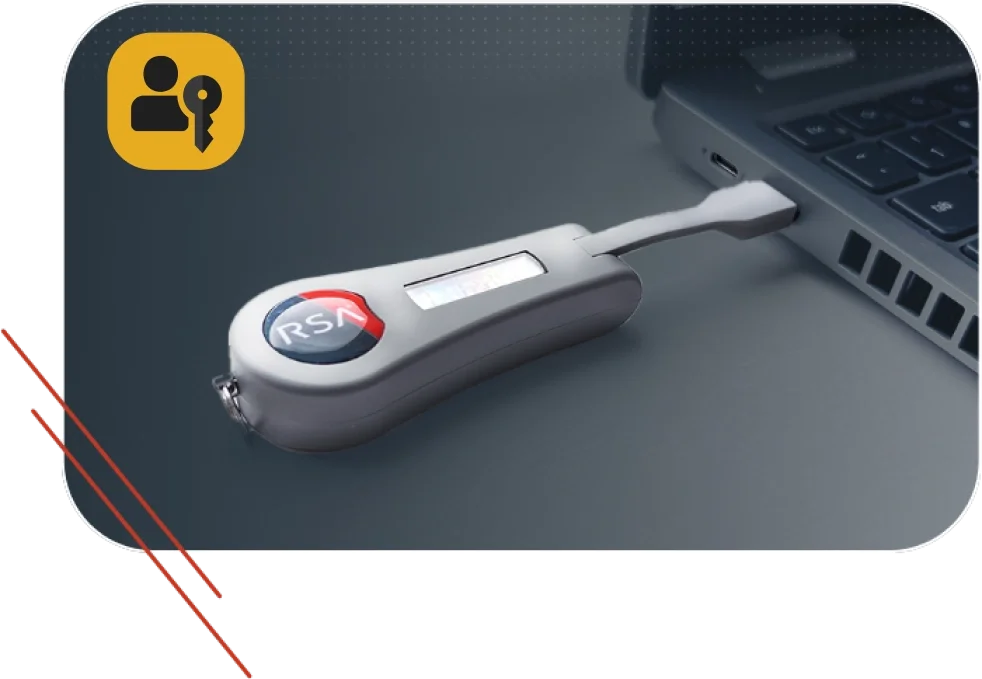
In order to progress to passwordless you need to have a hardware token for individuals unable to connect online.
- Passwordless, multi-functional hardware authenticator
- Combines FIDO protocols and OTP functionality in one device
- Features push-button OTP with LCD display
- Provides user-updatable firmware
- Works plugged in or unplugged
Specs/Requirements
The DS100 enables both FIDO2 and one-time password authentication, so you can meet existing needs for multiple authentication use cases—without having to manage two different devices.
Dynamic seeding of OTP reduces the cost and complexity of distributing and managing DS100 authenticators. Instead of receiving each device pre-seeded, any device can be sent to any end user for self-seeding and registration—and easily reassigned as needed.
Even though the DS100 is physically deployed, it’s managed in the cloud using the Cloud Authentication Service. This makes it possible to increase management efficiency without compromising the security of a full-featured hardware authenticator.
Whether using a FIDO2 or OTP login, users don’t have to rely on traditional credentials that are hard to remember (and easy for bad actors to guess). They can authenticate with a biometric or other method for FIDO2, or just push a button to generate an OTP code.
Part of a Unified Identity Platform
The DS100 is part of the AI-powered RSA Unified Identity Platform. The platform combines automated identity intelligence, authentication, access, governance, and lifecycle into one cohesive solution, to protect the gaps and blind spots that result from combining multiple point solutions.










Learn more about the DS100 Hardware Authenticator

Goes Everywhere Other Authenticators Can’t
The DS100 brings FIDO2 authentication to locations and industries where hardware authenticators are preferred or required, such as high-security environments that restrict cell phone use. These use cases include national defense agencies, financial services and healthcare organizations, and organizations conducting sensitive research in secured areas.

Now Available with ID Plus
The DS100 is available as a component of ID Plus, the comprehensive identity security solution that supports on-premises, multi-cloud, and hybrid configurations. ID Plus delivers automated identity intelligence, authentication, access, governance, and lifecycle capabilities to defend against the most frequent cyberattacks.
How to Buy
Call RSA at 800.995.9095 to speak with a representative, or connect with a partner from our network of trusted resellers and distributors. Use the RSA partner locator tool to find a trained, accredited, and value-added RSA partner.